
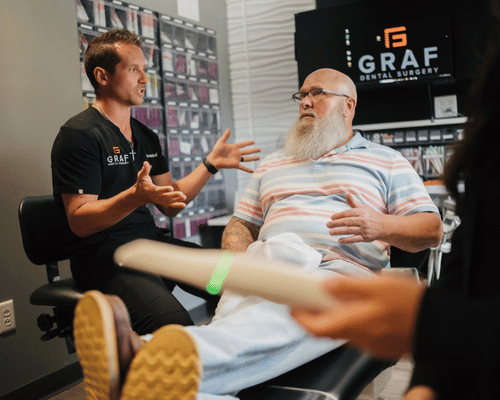
Recovering from dental implant surgery is an important part of achieving a healthy, long-lasting smile. While the procedure itself is highly predictable, the recovery from dental implant surgery can vary from person to person. Factors such as the number of implants placed, whether you needed a bone graft or tooth extraction, and your overall general health all play a role in the healing process. Following your surgeon’s post-operative instructions and practicing proper care are essential to supporting a smooth recovery and the long-term success of your dental implants.
The good news is that most patients experience a straightforward recovery process with manageable discomfort and gradual improvement each day. Understanding what to expect and knowing how to care for the implant site can help reduce the risk of complications while giving your dental implant the stable foundation it needs to heal properly. Simple steps like protecting the surgical area, maintaining good oral hygiene, and choosing the right foods can make a significant difference in your recovery.
Whether you’re preparing for your upcoming dental implant procedure or already home recovering, these seven expert tips will help you navigate the healing journey with confidence and set the stage for a successful, health new smile.
The first day after your dental implant surgery is one of the most important stages of the recovery process. During this time, your body begins forming a blood clot at the surgical site, which is essential for proper healing. Protecting this area allows your body to begin the early stages of tissue repair and creates the foundation for successful implant integration.
It's normal to experience minor bleeding, mild swelling, and some discomfort during the initial recovery period. Applying ice packs or a cold compress to the outside of your face for short intervals can help minimize swelling and improve comfort during the first 24 to 48 hours. Your oral surgeon may also recommend pain medication or approved over-the-counter pain relievers to help manage discomfort. Always take medications exactly as directed and follow any specific instructions provided by your dental team.
During this time, avoid vigorous rinsing, touching the implant site, smoking, drinking through a straw, or participating in strenuous activity, as these can disrupt the blood clot and interfere with healing. Instead, focus on resting, staying hydrated, and giving your body the time it needs to begin recovering.
Although every patient's experience is different, carefully following your post-operative instructions during the first 24 hours can significantly reduce the risk of complications and help ensure a smooth recovery from dental implant surgery.
What you eat after your dental implant surgery can have a significant impact on your recovery. During the first several days, your implant site and surrounding gum tissue need time to heal without added pressure or irritation. Following a soft food diet helps protect the surgical area while providing your body with the nutrients it needs for bone healing and soft tissue healing.
Focus on nutrient-rich soft foods that are easy to chew and swallow, such as yogurt, applesauce, mashed potatoes, scrambled eggs, oatmeal, cottage cheese, smoothies (without a straw), soups that have cooled to a warm temperature, and protein shakes. Eating enough protein, staying well-hydrated, and maintaining a balanced diet all support your body's natural healing process and can contribute to a smoother recovery.
At Graf Dental Surgery, we want to make those first few days of recovery as simple as possible. That's why every All-on-X patient goes home with a post-operative care package that includes recommended foods and drinks to enjoy during the first 48 hours after surgery. Having a plan in place takes the guesswork out of meal planning and helps patients confidently follow a soft-food diet while their mouths begin to heal.
As your recovery progresses, your oral surgeon will let you know when it's safe to begin introducing firmer foods. Until then, avoid hard foods, crunchy foods, sticky foods, and very hot foods, as they can irritate the surgical site or place unnecessary pressure on the implant before it has had time to stabilize.
Remember, healing takes time. Sticking with a soft food diet for the recommended period may require a little patience, but it's one of the simplest ways to protect your implant and support the long-term success of your dental implants.
Keeping your mouth clean after dental implant surgery is one of the most important steps you can take to support a smooth recovery. While you may be tempted to avoid brushing near the surgical area, maintaining good oral hygiene helps reduce harmful bacteria, lowers the risk of infection, and supports the body's natural healing process.
For the first few days, be gentle around the implant site and surrounding gum tissue. Continue brushing your natural teeth but avoid directly scrubbing the surgical area until your oral surgeon or dental provider tells you it's safe to do so. Your dental team may also recommend rinsing with warm salt water or a prescription antimicrobial mouth rinse to help keep the area clean. Be sure to follow all post-operative care instructions and avoid vigorous swishing, especially during the initial stages of healing.
At Graf Dental Surgery, we also help our patients prepare for the next stage of recovery. Every All-on-X patient receives a Waterpik® to take home and use once our team determines it's appropriate during the healing process. When introduced at the right time, a Waterpik can become an important part of maintaining good oral hygiene around your new teeth and supporting your long-term oral health.
Practicing gentle oral hygiene not only protects the surgical site but also supports the osseointegration process which is the natural process in which the titanium implant fuses with your jawbone to create a stable foundation for your future replacement tooth. This stage of healing is essential for the long-term stability and success of your dental implant.
Remember, healing doesn't mean ignoring your oral health. Keeping the rest of your mouth healthy while protecting the surgical area creates the ideal environment for proper healing and helps set the stage for a healthy, confident new smile.
One of the most common questions patients ask after dental implant surgery is, "Is this normal?" While every person's recovery process is unique, understanding what to expect can give you peace of mind and help you recognize when healing is progressing as it should.
During the first week, it's common to experience mild swelling, bruising, tenderness, and slight discomfort around the implant site. These symptoms are a normal part of the body's healing response and should gradually improve over the next several days. The amount of swelling and your overall recovery time may vary depending on the number of implants placed, whether you had a bone graft or tooth extraction, and your overall health.
Keep in mind that while the soft tissues often heal within the first couple of weeks, the complete healing process takes much longer. Beneath the gums, your jawbone is undergoing osseointegration which is the process where the titanium implant fuses with the bone to create a strong, stable foundation for your future replacement tooth. This important stage of healing can take several months, even though you may feel back to normal much sooner.
Although some discomfort is expected during the initial recovery, your symptoms should gradually improve each day. If you notice increasing pain instead of improvement, excessive swelling after the first few days, persistent bleeding, or any other symptoms that concern you, don't wait for your next appointment. Contact your oral surgeon or dental team so they can evaluate your healing and ensure your recovery stays on track.
While most patients experience a smooth recovery after dental implant surgery, it's important to know the difference between normal healing and signs that something may need attention. Prompt communication with your oral surgeon can help address concerns early and reduce the risk of complications.
As your mouth heals, you should notice gradual improvement each day. However, you should contact your dental professional if you experience persistent pain that worsens instead of improving, prolonged or heavy bleeding, increasing swelling several days after surgery, or any signs of infection, such as fever, pus, or a foul taste or odor coming from the surgical site. These symptoms don't always indicate a serious problem, but they should be evaluated as soon as possible.
It's also important to let your dental provider know if your temporary restoration feels loose, your bite suddenly changes, or you have concerns about how your implant is healing. Early evaluation allows your dental team to identify and treat problems before they affect the long-term success of your treatment.
At Graf Dental Surgery, we encourage patients to contact us anytime they have questions during their recovery. We'd much rather answer a concern early than have you worry at home or delay treatment if something isn't healing as expected. Staying in close communication with your dental team is one of the best ways to protect your investment and reduce the risk of implant failure.
Your recovery doesn't end when you leave the office. Follow-up visits are an essential part of the healing process and allow your dental team to monitor your progress, answer questions, and ensure everything is healing as expected. Even if you're feeling great, these appointments play an important role in the long-term success of your dental implants.
During your follow-up care, your oral surgeon will evaluate the surgical site, check your healing, and make sure the osseointegration process is progressing properly. If needed, sutures may be removed, your oral hygiene routine may be adjusted, and you'll receive guidance on when it's safe to return to normal activities and foods. These appointments also give you the opportunity to ask questions about your recovery and receive personalized recommendations based on your progress.
As healing continues, your dental team will determine when you're ready for the next phase of treatment. Depending on your treatment plan, this may include abutment placement and, ultimately, your final restoration, the custom teeth designed to restore both your smile and your ability to eat and speak with confidence.
Attending your regular follow-up appointments helps ensure your implant is healing properly and provides the best opportunity for long-term stability. While the surgery itself is an important milestone, these visits help confirm that your recovery is progressing as planned and that you're on your way to enjoying a healthy, confident new smile for years to come.
A successful recovery is only the first step toward enjoying the full benefits of your dental implant treatment. Once your implant has fully healed and your final restoration is in place, maintaining excellent oral health is key to protecting your investment and ensuring long-term success.
Just like natural teeth, dental implants require consistent care. Brushing, flossing, and maintaining good oral hygiene at home help keep the surrounding gum tissue healthy, while regular dental check-ups and professional cleanings allow your dental team to monitor your implants and address any concerns before they become bigger problems. Even though a titanium implant can't develop a cavity, the surrounding tissues still need proper care to remain healthy and support your implant for years to come.
Dental implants are considered the best option for many patients with missing teeth because they provide a durable, permanent solution that looks, feels, and functions like natural teeth. With proper care and routine maintenance, they offer the long-term stability needed to confidently eat, speak, and smile. Protecting your oral health after treatment is one of the best ways to maximize the long-term success of your dental implants.
Recovering from dental implant surgery doesn't have to be overwhelming. By following your surgeon's instructions, protecting the implant site, eating the right foods, maintaining good oral hygiene, attending your follow-up appointments, and knowing when to ask questions, you'll give your body the best opportunity for a smooth recovery and long-term implant success.
At Graf Dental Surgery, we're committed to supporting our patients through every stage of their recovery journey, from your initial consultation to your final smile. Whether you're preparing for treatment or currently recovering, our experienced team is here to provide guidance, answer your questions, and help you feel confident throughout the entire process.
If you're considering dental implants or would like to learn whether they're the right solution for replacing missing teeth, schedule a consultation with Graf Dental Surgery. We're here to help you take the first step toward a healthier, stronger, and more confident smile.
We look forward to meeting you. Call (740) 672-5893 today or request an appointment online to set up your first visit. We’ll be in touch soon.


