

When many teeth are missing, damaged, painful, or failing, deciding what to do next can feel overwhelming. The good news is that patients do not have to figure it out alone. Full mouth restoration brings multiple dental treatments together in a carefully planned approach to improve the health, function, comfort, and appearance of a smile.
Every treatment plan is different. One person may be able to preserve several natural teeth with restorative care, while another may need implant-supported teeth to replace a failing dental arch. Understanding the options can make the first consultation feel much more manageable.
Clinical note: This article provides general education and cannot determine which treatment is appropriate for an individual. A dentist must examine the teeth, gums, bite, jawbone, medical history, and imaging before making personalized recommendations.
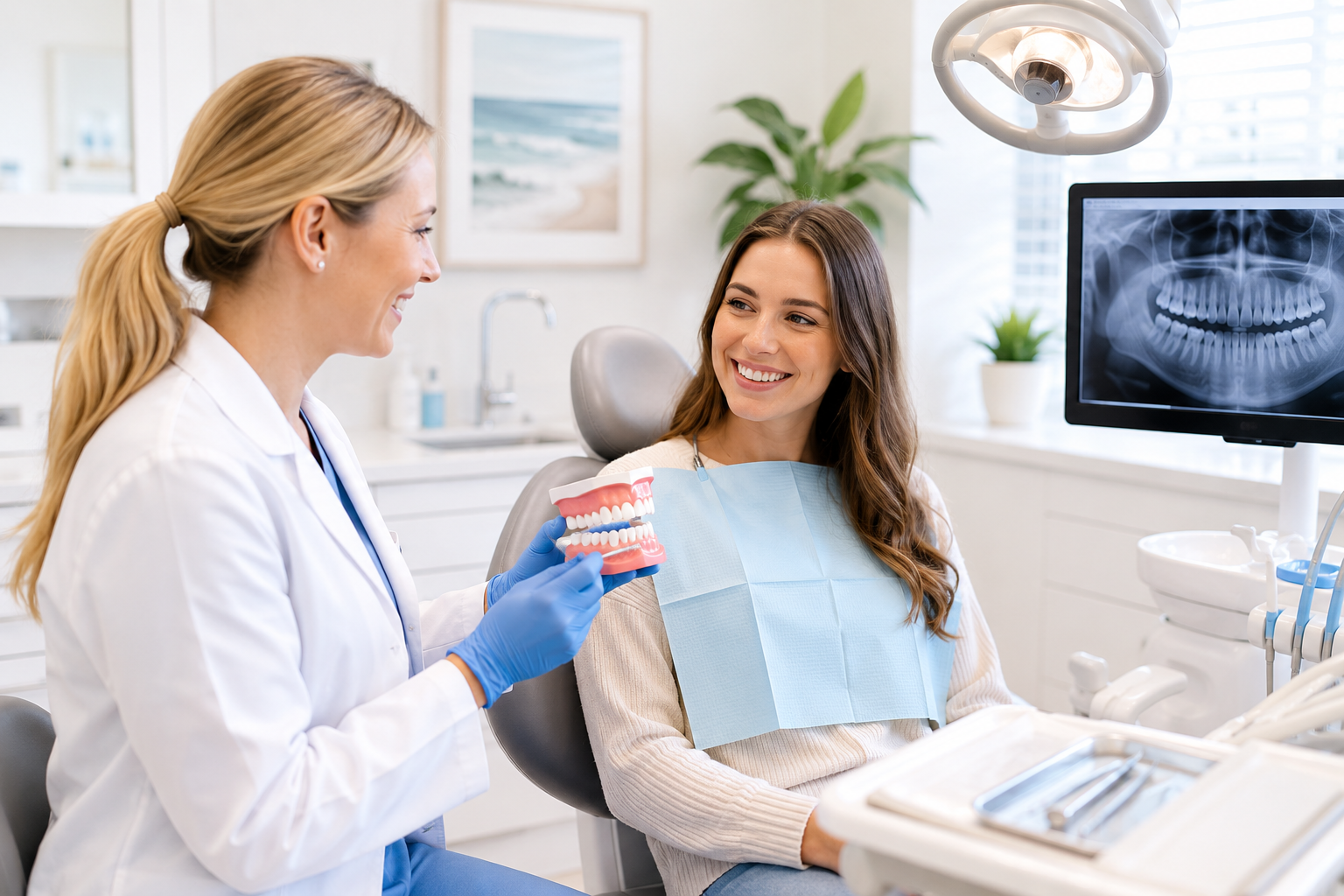
Full mouth restoration, sometimes called full mouth reconstruction or complete smile restoration, is a customized plan for rebuilding or replacing most or all of a patient’s teeth. It is not a single procedure. Instead, it may combine several forms of restorative, surgical, and cosmetic dental care.
The main goal is usually to restore function. That can mean helping a patient chew more comfortably, replacing unstable teeth, addressing failing dental work, or creating a bite that works more effectively. Smile appearance is also considered because tooth shape, color, position, and proportion affect the final result.
Full mouth restoration is different from a cosmetic smile makeover. Cosmetic treatment primarily changes appearance, while full mouth treatment addresses widespread functional or structural dental concerns. The two can overlap, but health and function guide the treatment plan.
A comprehensive restoration may be discussed when isolated repairs are no longer enough to address the overall condition of the mouth. Patients seeking full mouth restoration in Chillicothe, OH may be dealing with:
Having one of these concerns does not automatically mean that full mouth treatment is necessary. A dentist may find that a smaller, staged treatment plan can meet the patient’s needs. Whenever possible and appropriate, the condition and long-term outlook of existing teeth should be considered before replacement options are discussed.
Because full mouth restoration is personalized, there is no standard list of procedures for every patient. The plan depends on which teeth can be maintained, how many teeth are missing, the condition of the supporting tissues, the bite, and the patient’s preferences.
Teeth that have a suitable long-term outlook may be repaired rather than removed. Depending on the findings, a broader plan could involve fillings, crowns, bridges, or other restorative services. Gum or root canal care may also need to occur before a tooth receives its final restoration.
Preserving a natural tooth is not always possible, but a comprehensive evaluation helps the dentist separate teeth that may be restored from those with a poor outlook.
Dental implants are one option for replacing missing teeth. An implant is placed in the jaw and supports a dental restoration. Depending on the situation, implants may support an individual replacement tooth, a bridge, or a larger restoration replacing an entire arch.
Implant treatment is not suitable for everyone. Candidacy depends on clinical findings and personal health factors, so imaging and a detailed medical review are important parts of planning.
When most or all teeth in an upper or lower arch cannot be predictably maintained, a dentist may discuss a full-arch solution. This approach uses strategically positioned implants to support a fixed restoration that replaces a complete row of teeth.
GRAF Dental offers full-arch and All-on-X implant solutions, along with permanent implant-supported teeth. These options are intended for selected patients, and only an in-person evaluation can establish whether they are appropriate.
Traditional removable dentures remain an option for replacing a full set of teeth. Some patients may also be able to consider a denture that attaches to implants for additional support. Each approach differs in stability, maintenance, feel, treatment requirements, and cost.
A helpful consultation should explain these differences without pressuring the patient toward one solution.
Complex dental care begins with listening. Patients should have an opportunity to explain what bothers them, what they hope to change, and what concerns they have about comfort, time, or finances.
A full mouth assessment may include an examination, dental imaging, review of the bite, and discussion of medical and dental history. Photographs, scans, impressions, or digital records may also help the team plan the shape and position of proposed teeth.
GRAF Dental uses personalized planning and offers 3D planning for implant and surgical care. The practice also has an in-house dental lab, which can support communication between the clinical team and the technicians creating dental prosthetics.
Before agreeing to treatment, a patient should understand:
One of the most important things to understand is that feeling better after a procedure does not necessarily mean every stage of treatment is complete. Full mouth restoration may involve several distinct phases.
Early recovery refers to the period when immediate tenderness, swelling, or sensitivity begins to settle after treatment. The experience depends on the procedures performed and the individual patient. The dental team should provide instructions for eating, cleaning the mouth, using prescribed medications, and recognizing reasons to call the office.
The gums and other soft tissues heal on their own schedule. Follow-up visits allow the team to check the tissues, evaluate comfort, and make adjustments when needed. Soft-tissue healing is separate from deeper bone healing.
For implant patients, osseointegration describes the biological process through which the implant becomes integrated with the surrounding jawbone. A patient may feel comfortable before this process is complete, so instructions about diet and use of a temporary restoration still matter.
The full treatment is not complete until the dentist determines that the mouth is ready for the final restoration and that the planned stages have been finished. The final teeth may require try-ins, bite checks, appearance evaluations, or adjustments. Individual timelines vary, and the dentist should provide an estimate based on the specific plan rather than a one-size-fits-all promise.
It is normal to feel nervous about extensive dental work, particularly after years of discomfort or difficult dental experiences. A supportive team should explain each step, invite questions, and discuss ways to make care more manageable.
GRAF Dental offers sedation options for appropriate patients undergoing implant or surgical treatment. Sedation is not the same as pain control, and the available type depends on the procedure, health history, medications, and level of anxiety. Patients should arrange transportation and follow all pre- and post-treatment instructions when sedation is part of the plan.
There is no single price for full mouth restoration because the term can describe many different combinations of care. Cost may be influenced by the number of teeth treated, the use of implants, the type of temporary and final restorations, diagnostic records, surgical needs, materials, sedation, and laboratory work.
Patients should request a written estimate that separates the treatment into stages. It is also helpful to ask which services are included, which fees could change, whether insurance benefits may apply, and what financing or payment options are available.
The lowest initial fee is not always the only factor worth considering. Patients should also evaluate the clarity of the plan, the materials proposed, follow-up care, maintenance expectations, and the team’s experience with the recommended procedure.
A restored smile still requires daily and professional care. Crowns, bridges, dentures, and implant-supported teeth cannot develop cavities in the same way natural enamel can, but the gums and supporting tissues remain important.
The dental team may recommend a combination of brushing, floss threaders, interdental brushes, water flossing, or tools designed for a specific restoration. Regular dental visits allow the dentist to examine the mouth, evaluate the bite, clean areas that are difficult to reach, and address small concerns before they become larger ones.
Patients should also contact the office if a restoration feels loose, the bite suddenly feels different, or persistent discomfort develops. Waiting for a routine appointment may allow a manageable concern to progress.
No. Dentures are one possible way to replace missing teeth, but full mouth restoration is a broader term. It may include repairing natural teeth, placing crowns or bridges, using dental implants, or combining several treatments.
Not necessarily. The dentist evaluates each tooth and the mouth as a whole. Teeth with a reasonable outlook may be included in the plan, while teeth that cannot be maintained may need a different approach. Recommendations should be based on examination and imaging.
Temporary restorations may be available in some treatment plans, including selected full-arch cases. Their design, function, and timing depend on the patient’s condition and procedure. Temporary teeth should not be confused with the completed final restoration.
Coverage varies by plan and procedure. Some restorative services may receive partial benefits, while implant, cosmetic, or elective components may have limited coverage. Patients can ask for procedure codes and a written treatment estimate before contacting their insurer.
The timeline depends on the starting condition, procedures involved, healing response, and whether implant integration or laboratory stages are required. Early symptom improvement, gum healing, implant integration, and delivery of the final restoration are separate milestones. A dentist can outline the anticipated stages after completing an evaluation.
It helps to bring a medication list, relevant medical information, insurance details, and questions about comfort, alternatives, timing, maintenance, and cost. Patients may also write down their main goals so the conversation stays focused on what matters most to them.
Widespread dental problems can affect eating, speaking, confidence, and everyday comfort, but patients may have more options than they realize. The first step is not committing to a procedure. It is receiving a thorough evaluation and a clear explanation of the possibilities.
For patients considering full mouth restoration in Chillicothe, OH, GRAF Dental provides personalized implant and surgical care, including full-arch implant solutions and permanent implant-supported teeth. To ask questions or request a consultation, contact the team at 40 N Plaza Blvd, Chillicothe, OH 45601, call (740) 672-5893, or visit the practice website. A consultation can help clarify which options, if any, fit the patient’s health, needs, and goals.
We look forward to meeting you. Call (740) 672-5893 today or request an appointment online to set up your first visit. We’ll be in touch soon.